






Red Light Therapy for Muscle Recovery
Post-Workout Wellness Guide
Red Light Therapy for Muscle Recovery: What to Know Before You Start
After a demanding workout, long run, strength session, or active day, recovery becomes part of the routine. Rest, hydration, mobility work, and good nutrition still matter, but many active adults are also exploring red light therapy as part of their post-workout wellness setup at home.
Red light therapy, also called photobiomodulation, uses red and near-infrared light. Research continues to examine its potential role in exercise recovery, muscle comfort, and physical performance. For shoppers, the practical question is usually simpler: what type of red light therapy panel makes sense for a recovery-focused routine at home?
This guide explains how people use red light therapy after exercise, what current research suggests, why panel coverage matters, and how to choose an EXESAS panel that fits your routine.
Quick Answer: Can Red Light Therapy Be Part of a Muscle Recovery Routine?
Many people use red light therapy as part of a post-workout recovery routine, particularly with panels that include red and near-infrared wavelengths. Research into photobiomodulation and exercise recovery is ongoing, with some studies reporting promising findings, but results can vary based on the device, light dose, timing, activity, and individual user.
For home use, choose a panel with enough coverage for the muscle groups you plan to include, follow the device instructions, use eye protection as directed, and view red light therapy as one part of a complete recovery routine.
In This Guide
Why Recovery Matters After Exercise
Exercise places stress on the body. After lifting weights, running, cycling, completing a high-intensity workout, or spending a physically demanding day on your feet, it is common to think about recovery and readiness for your next activity.
A strong recovery routine often includes simple habits such as:
- Rest and adequate sleep
- Hydration
- Balanced nutrition
- Light movement or mobility work
- Stretching or other routines appropriate for your activity
- Time between demanding training sessions
Red light therapy is one additional option some people include in that routine. It should not replace rest, appropriate medical care, or the fundamentals that support healthy training habits.
Important note: Pain after exercise is not always normal soreness. Seek qualified medical guidance for severe pain, sudden injury, major swelling, weakness, inability to use a joint or muscle normally, or symptoms that do not improve as expected.
How People Use Red Light Therapy After Workouts
People interested in red light therapy for muscle recovery often look for a routine that is simple enough to use after exercise. Instead of scheduling a separate appointment outside the home, a panel can be set up in a home gym, bedroom, office, or wellness area for regular use.
A recovery-focused user may position a panel toward areas commonly involved in training, such as:
- Quadriceps and hamstrings after leg workouts or running
- Calves after walking, running, cycling, or sports
- Shoulders and arms after upper-body training
- Back and torso after strength training or physically demanding work
- Larger body areas as part of a full-body wellness routine
The convenience of a panel is important here. A small device may work for one focused area, but a larger panel can make it easier to position more of the body in front of the light without moving the device several times.
Red Light Therapy Is Usually One Part of the Routine
Most active people do not rely on one wellness tool alone. A red light therapy session may fit alongside hydration, a post-workout meal, mobility work, or rest. The right routine is one that fits your schedule and supports consistent, responsible use.
What Does Research Say About Red Light Therapy and Muscle Recovery?
Red and near-infrared light therapy is also known as photobiomodulation. Researchers have studied photobiomodulation in relation to exercise performance, delayed-onset muscle soreness, and recovery after physical activity.
A 2025 systematic review focused on whole-body photobiomodulation for exercise performance and recovery. The review reflects growing interest in broader light-based setups, but it also reinforces an important point for consumers: research protocols can vary significantly across device type, timing, dose, training method, and measured outcome.
This means shoppers should be cautious with sweeping promises. A study of one device or protocol does not automatically establish the result of every home panel or every routine.
A Practical Way to Understand the Evidence
- Research into photobiomodulation for exercise and recovery is continuing.
- Some studies have reported promising outcomes in specific settings.
- Equipment, wavelengths, timing, dosage, and study designs vary.
- No home routine should be presented as a guaranteed result for every user.
- The best approach is to follow device instructions and maintain realistic expectations.
For a home shopper, the most useful decision is often choosing a device that is easy to use, offers the coverage needed for your routine, and includes clear instructions for safe operation.
What Wavelengths Matter for a Recovery-Focused Routine?
When comparing red light therapy panels, you will often see visible red light and near-infrared light listed together.
660nm red light is a common visible red wavelength found in home panels. 850nm near-infrared light is commonly included in panels designed for broader wellness and body-focused routines.
Several larger EXESAS panels include four wavelengths: 630nm, 660nm, 810nm, and 850nm. This creates a broader red and near-infrared light profile in one panel.
| Wavelength Type | What Shoppers Should Know | Why It Matters When Comparing Panels |
|---|---|---|
| Red Light | Visible light commonly included in home red light therapy devices | Useful to identify as part of a complete panel specification |
| Near-Infrared Light | Light commonly included in body-focused and broader wellness panels | Often prioritized by shoppers creating a post-workout routine |
| 4-Wavelength Panel | Includes multiple red and near-infrared wavelengths | Provides a broader light profile in a single device |
For a full explanation of common wavelengths, read our guide: 660nm vs 850nm Red Light Therapy: What’s the Difference?
What Size Red Light Therapy Panel Makes Sense for Muscle Recovery Routines?
If your interest is connected to exercise, your panel size matters because muscle groups can cover larger areas of the body. A compact panel may be practical for a shoulder, calf, knee area, or another targeted location. A mid-size or large panel can be more convenient for legs, back, torso, or broader routines.
| Your Routine Goal | Panel Category to Consider | Why It May Fit |
|---|---|---|
| One smaller target area | Compact panel | Easy starting point for focused sessions and smaller spaces |
| Legs, shoulders, or upper body | Mid-size panel | Provides more coverage with fewer adjustments |
| Back, torso, larger body areas, or frequent use | Large panel | More practical coverage for an active household or home gym |
| Dedicated full-body setup | Full-body panel | Designed for shoppers seeking maximum coverage and convenience |
If your recovery routine involves larger muscle groups, choosing enough coverage at the beginning can make your setup easier to use consistently.
For a complete panel sizing guide, read: What Size Red Light Therapy Panel Do I Need?
Build a Post-Workout Wellness Setup at Home
Explore EXESAS panels designed for targeted use, larger coverage, and full-body home routines.
How to Build a Simple At-Home Red Light Therapy Routine
A recovery-focused routine does not need to be complicated. Start with your device instructions, choose the areas you plan to include, and create a schedule that fits naturally around your activities.
Simple Post-Workout Routine Framework
- Complete your workout or activity: Finish your normal training, cool-down, hydration, and movement routine.
- Choose the area: Decide which area you plan to position in front of the panel, such as legs, shoulders, or back.
- Set up safely: Follow the recommended distance and setup directions for your EXESAS panel.
- Use the timer: Follow your device instructions for session timing instead of guessing or extending the session unnecessarily.
- Use eye protection: Wear the recommended eye protection whenever your device directions instruct you to do so.
- Stay consistent: Focus on an easy, repeatable routine rather than expecting immediate changes after one use.
Should You Use Red Light Therapy Before or After a Workout?
Research has explored photobiomodulation at different times around exercise, including before and after activity. For an at-home user, it is best to follow the directions for the specific device and choose a timing approach that fits comfortably into your routine.
Some people may prefer using a panel after exercise because it pairs naturally with their cool-down or relaxation time. Others may prefer a different time of day. Consistency and correct device use matter more than building a complicated schedule.
How Long Should a Session Last?
Session time should be guided by your exact device instructions. EXESAS provides usage guidance on its FAQ page, and your product manual should remain your primary reference when starting a routine.
Read the related guide: How Long Should You Use a Red Light Therapy Panel?
Red Light Therapy for Runners, Lifters, and Active Adults
Different activities may lead shoppers to prioritize different panel sizes and setups.
For Runners and Walkers
People who spend significant time running or walking may want a setup that makes it easy to position the calves, thighs, or larger portions of the legs in front of the light. A mid-size or large panel may provide a more convenient routine than a small device.
For Strength Training
Strength-focused users may want flexibility for upper-body and lower-body routines on different training days. A panel with broader coverage can be easier to position for shoulders, legs, back, or torso depending on the workout.
For Recreational Sports and Active Lifestyles
People who golf, play pickleball, cycle, hike, work physical jobs, or stay active throughout the week may value a panel that can support a range of targeted areas without being limited to one body region.
For a Home Gym Setup
If you already have a dedicated workout space, a large red light therapy panel can be incorporated into that room for easier access after activity. Stands and positioning options may also make a larger panel more practical for regular use.
What to Look For in a Red Light Therapy Panel for Active Use
1. Enough Coverage for Your Routine
Think about the body areas involved in your typical workouts. Larger muscle groups often make a larger panel more convenient.
2. Red and Near-Infrared Wavelengths
Review the listed wavelengths before selecting a panel. Many shoppers building a body-focused routine look for both red and near-infrared light options.
3. Timer and Simple Controls
A built-in timer and straightforward controls can help you follow a repeatable routine after exercise, especially when you do not want extra setup steps.
4. Stand and Positioning Options
A well-positioned panel is easier to use on legs, back, shoulders, or larger areas. Consider your available room and any compatible stand options before selecting a larger panel.
5. Clear Product Instructions
Your device should include clear information on setup, timing, distance, and safety. Use those instructions as your primary guide.
6. Warranty and Customer Support
A panel used as part of a regular home routine is an investment. Review warranty coverage and support information before purchasing.
EXESAS Panel Options for a Post-Workout Routine
EXESAS offers panels for targeted use, mid-size home routines, and larger full-body setups. The best choice depends on the amount of coverage you want and the space available in your home.
For Regular Home Use: EXESAS 324 LED, 1620W Panel
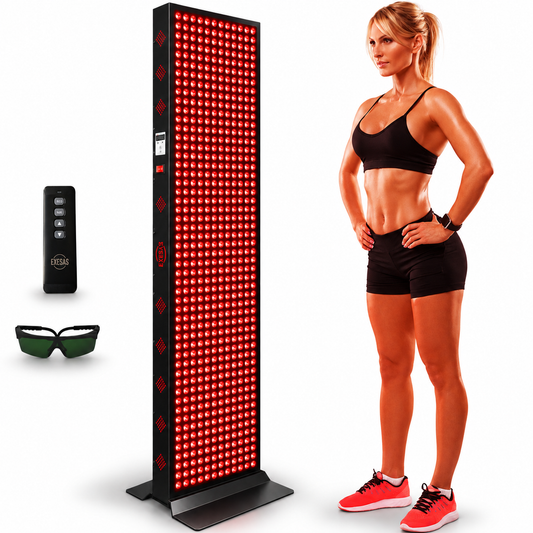
The EXESAS 324 LED, 1620W Dual-Chip Panel measures approximately 41 inches × 15 inches × 2.6 inches. It includes four wavelengths: 630nm, 660nm, 810nm, and 850nm. The panel includes a built-in timer, LCD control panel, remote control, base stand, eye protection, door mount, and adjustable hanging kit.
Good fit for: active adults seeking more coverage than a compact panel, leg-focused routines, upper-body positioning, regular home use, and shared household routines.
For Larger Coverage: EXESAS 800 LED, 4000W Full-Body Panel
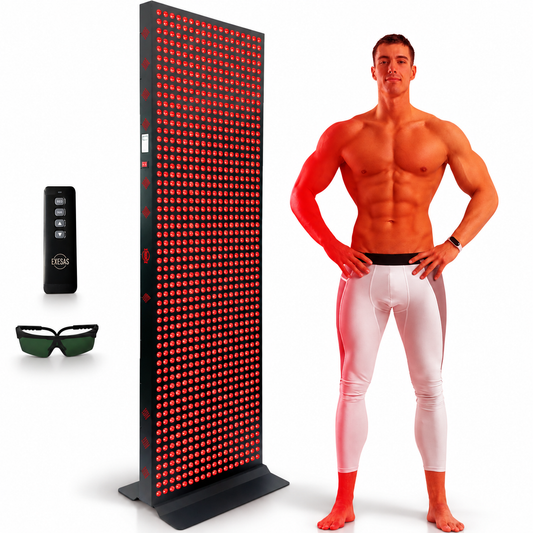
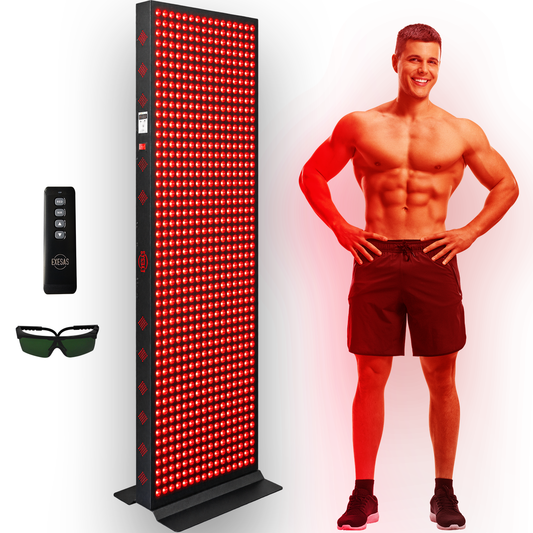
The EXESAS 800 LED, 4000W Dual-Chip Panel measures approximately 64 inches × 19 inches × 2.6 inches. It includes four wavelengths: 630nm, 660nm, 810nm, and 850nm, along with a built-in timer, LCD control panel, remote control, cooling fans, eye protection, and base stand.
Good fit for: home gyms, runners, lifters, physically active households, larger-area routines, and shoppers seeking broader coverage with fewer position adjustments.
Common Mistakes to Avoid
Mistake 1: Expecting One Session to Replace a Recovery Routine
Red light therapy should be viewed as one optional part of a larger routine. Sleep, hydration, nutrition, appropriate training loads, and medical care for injuries still matter.
Mistake 2: Choosing a Panel That Is Too Small for Your Main Muscle Groups
A compact panel can be useful for targeted use, but it may require several position changes when used for legs, back, or other larger areas. Consider coverage before you buy.
Mistake 3: Using Medical or Performance Claims as Guarantees
Research continues to develop, and results vary. Choose a device based on practical setup, product specifications, instructions, and the routine you plan to follow.
Mistake 4: Ignoring Safety Instructions
Follow product instructions, use eye protection as directed, and avoid extending sessions beyond the recommendations provided with your device.
Mistake 5: Continuing Through an Injury Without Medical Guidance
Do not rely on a wellness device to evaluate or manage a possible injury. Consult a qualified medical professional for significant pain, injury symptoms, or ongoing physical concerns.
Final Thoughts: Red Light Therapy for Muscle Recovery Routines
Red light therapy has become an area of interest for active adults looking to build a more complete at-home post-workout routine. Research into photobiomodulation and exercise recovery continues, and results should be approached with realistic expectations.
For shoppers, the most important considerations are practical: choose enough coverage for the muscle groups you plan to include, look for clearly listed red and near-infrared wavelengths, follow the device instructions, use recommended eye protection, and make the setup easy to use consistently.
EXESAS offers options for targeted home use, regular active lifestyles, and larger full-body setups designed to fit into a dedicated wellness or home gym routine.
Find an EXESAS Panel for Your Active Routine
Compare red light therapy panels for targeted use, larger-area sessions, and full-body home wellness setups.
FAQs About Red Light Therapy for Muscle Recovery
Can red light therapy be used after a workout?
Many people include red light therapy in a post-workout wellness routine. Follow the directions for your specific device, use appropriate safety measures, and maintain realistic expectations about results.
What size red light therapy panel is best for a recovery-focused routine?
A compact panel may fit a smaller targeted area, while a mid-size or large panel can be more convenient for legs, shoulders, back, torso, or broader home routines.
What wavelengths should active users look for in a red light therapy panel?
Many shoppers look for panels that include both red and near-infrared light. Several larger EXESAS panels include 630nm, 660nm, 810nm, and 850nm wavelengths in one device.
Should red light therapy replace rest or other recovery habits?
No. Red light therapy should be viewed as an optional addition to a complete routine that may include rest, hydration, nutrition, mobility work, and medical guidance when needed.
How long should I use a red light therapy panel after exercise?
Follow the session timing and distance instructions included with your specific EXESAS panel. The product manual and current EXESAS FAQ guidance should be your primary references when building a routine.
Do I need eye protection while using a red light therapy panel?
Use eye protection whenever the device directions recommend it. Follow the safety instructions included with your panel every time you use it.
Sources and Helpful Reading
- PubMed: A Systematic Review on Whole-Body Photobiomodulation for Exercise Performance and Recovery
- American Academy of Dermatology: At-Home Red Light Therapy Information and Safety Precautions
- EXESAS FAQs: Product Usage and Safety Information
- EXESAS 324 LED, 1620W Panel Specifications
- EXESAS 800 LED, 4000W Panel Specifications
This article is for educational purposes only and is not medical advice. Red light therapy is not a replacement for diagnosis or treatment of an injury or medical condition. Always follow the instructions for your device and consult a qualified healthcare provider with personal health questions.